
Fence repair guide
Storm-Damaged Fence: What to Check Before Repair
A practical homeowner checklist for evaluating localized storm damage, documenting the problem, and preparing for a safe fence repair assessment.
Published October 20, 2026 · By Fence Repair Now
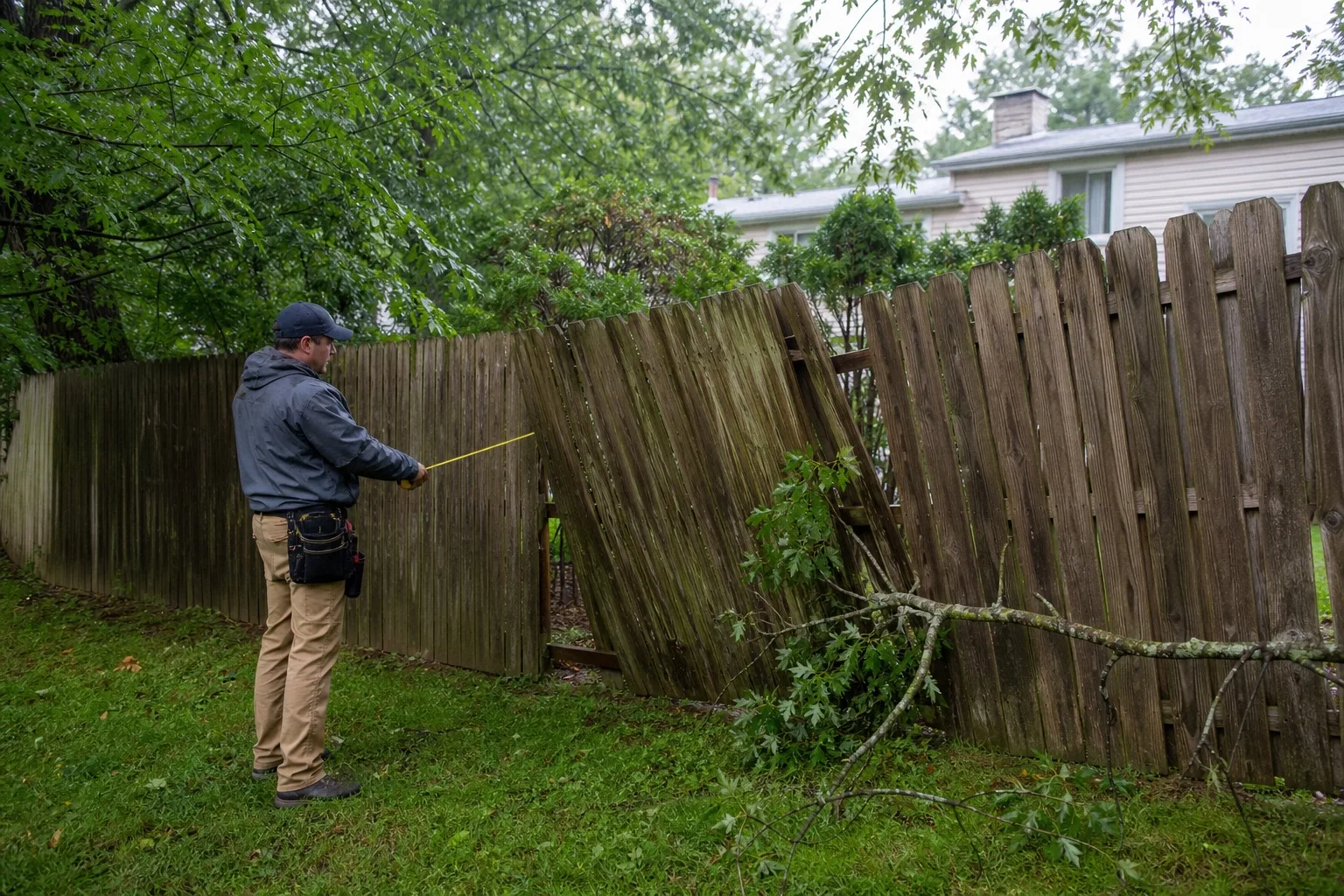
Storm damage does not always mean the entire fence has failed. A fallen branch may break one panel. Wind can loosen a post that was already weak at the soil line. A gate may stop latching because the hinge post moved only an inch. The right repair starts by finding where the load shifted and which parts remain sound.
Before looking closely, make sure the weather threat has ended and the area is safe to enter. Then inspect the whole affected run rather than focusing only on the most obvious broken board.
Start with safety, not cleanup
The National Weather Service advises property owners to wait until the severe-weather threat has passed before checking damage, wear long pants, long sleeves, and sturdy shoes, and contact local authorities when power lines are down. Its after-severe-weather guidance also warns people to stay out of damaged buildings.
Apply the same caution around a damaged fence:
- Keep children and pets away from leaning sections, sharp metal, cracked vinyl, and exposed fasteners.
- Do not touch a fence, tree, or branch that is contacting a utility line. Stay back and contact the appropriate authority or utility.
- Do not stand beneath hanging limbs or try to pull a large branch off the fence yourself.
- Avoid pushing on a section that moves freely. A panel can transfer force to a weakened post and cause a wider collapse.
- Photograph damage from a safe distance before moving small debris.
If a fallen tree, major limb, utility hazard, or damaged structure is involved, resolve that hazard before arranging fence work.
Photograph the entire damaged run
A close-up of a broken picket shows the symptom, but it may not show the cause. Take a simple photo set that documents the whole area:
- One wide photo from each end of the damaged run
- A ground-level photo of each leaning, cracked, or loose post
- Close photos of rails, brackets, fasteners, and panel connections
- Both sides of a damaged gate, including the hinges and latch
- The fallen branch or impact point, if it can be photographed safely
- Nearby drainage, washed-out soil, or standing water
These photos help distinguish a panel problem from a post or footing problem. They also create a record of the condition before temporary cleanup.
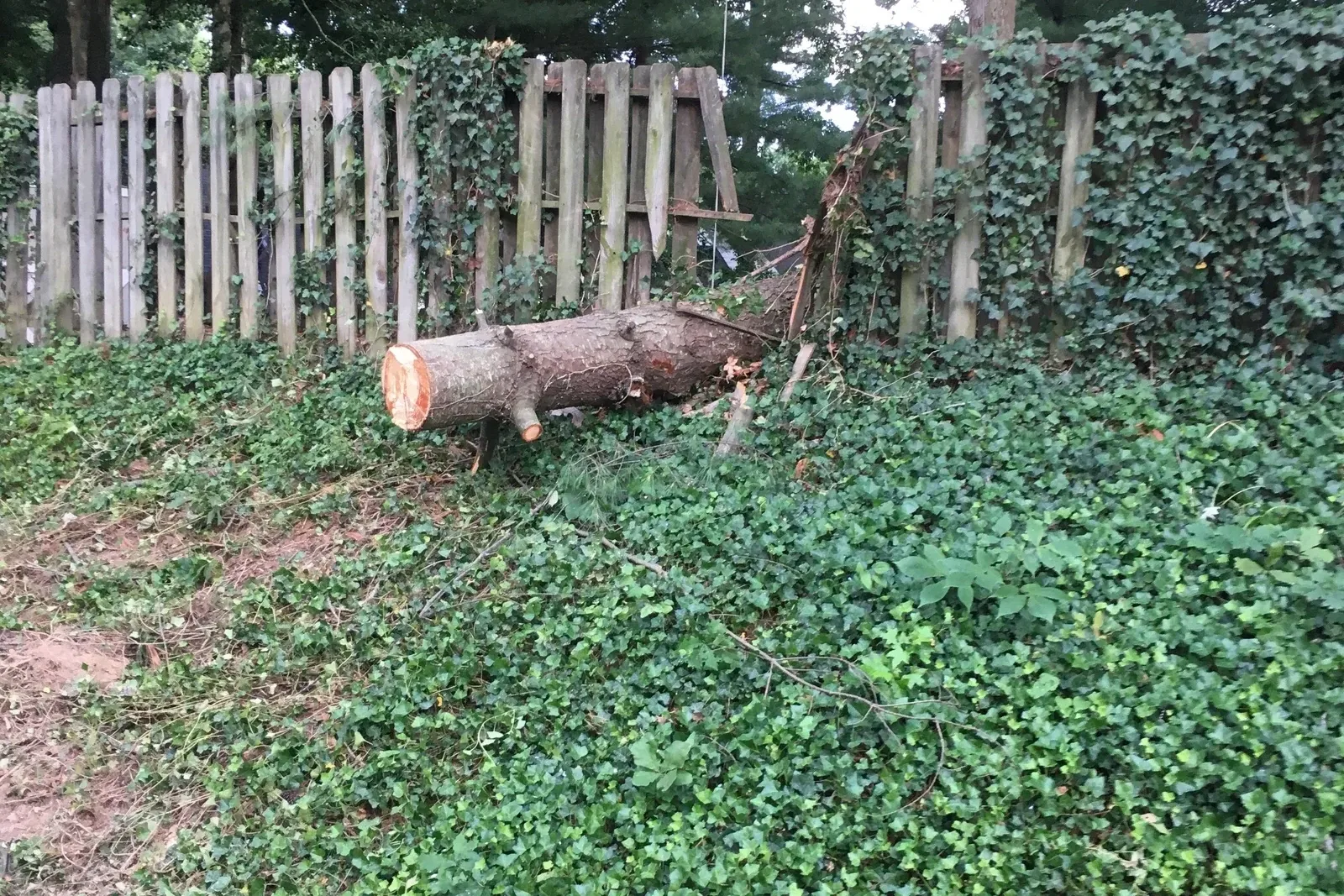
Find where the fence first moved
Look along the top of the fence from both ends. The section where the top line begins to dip or lean is often close to the primary failure. Then compare each part of the fence.
Posts and footings
A post may lean because the footing shifted in saturated soil, because the post broke inside a stable footing, or because the material lost strength near ground level. Look for a gap around the footing, fresh soil movement, a crack across the post, or wood that appears soft and fragmented.
Do not dig around the post to investigate. Excavation can expose utilities or destabilize a section that is still partly supported. A repair assessment can determine whether the post, footing, or both need attention. Learn more about the typical scope of fence post repair.
Rails and panels
A panel may be repairable when the posts remain stable and the damage is limited to rails, boards, brackets, or one manufactured section. Check whether the panel pulled away from the post, whether a rail split near its end, and whether adjacent sections are still square.
For a concentrated failure between sound posts, fence panel repair may be the relevant service. Reattaching a panel to a post that is moving or decayed, however, will not correct the underlying problem.
Gates
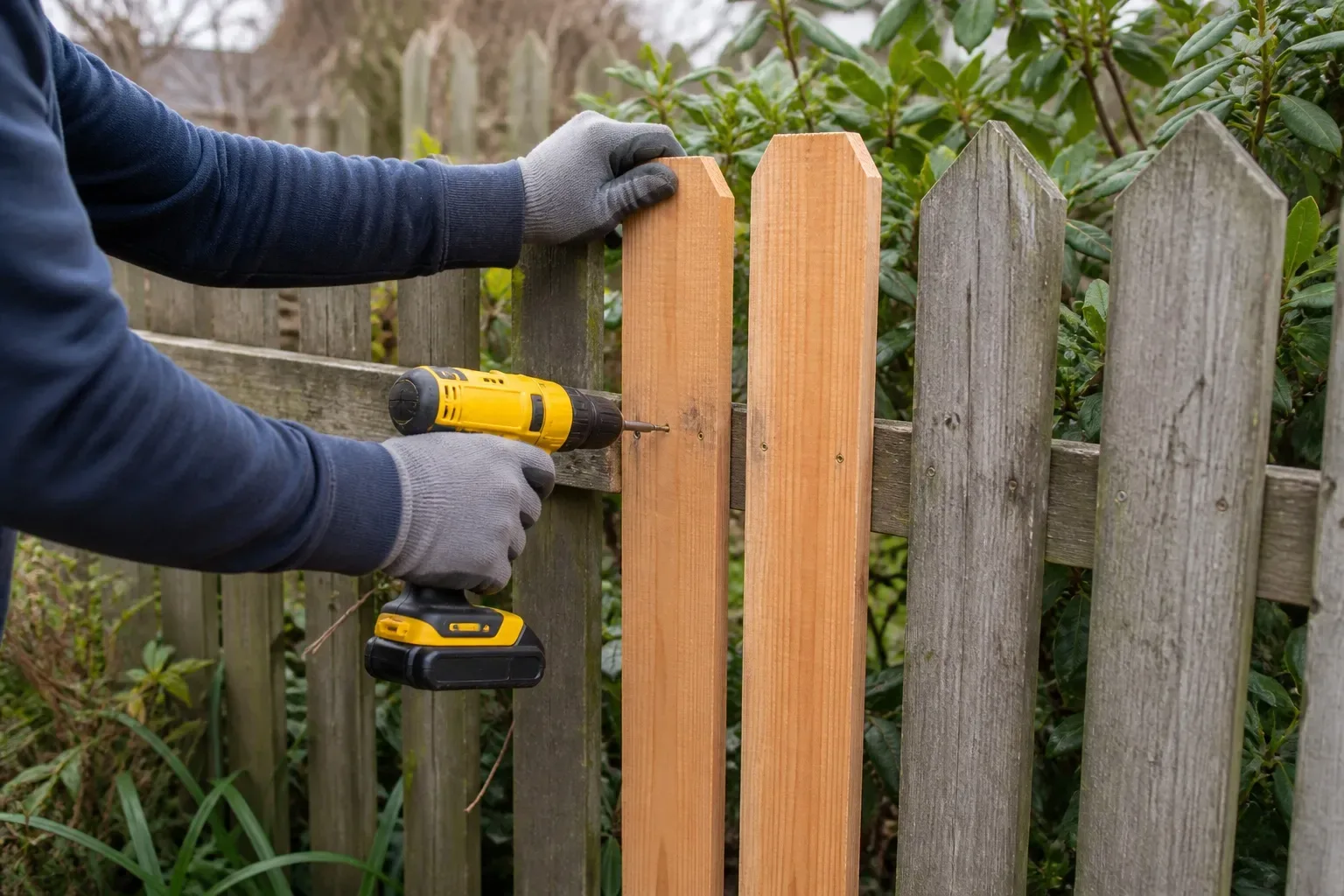
Wind and impact can move a gate post, loosen hinge hardware, or rack the gate frame. A gate that drags, swings open, or misses its latch should be checked as a complete assembly. Tightening the latch alone may hide a post or hinge problem for a short time. The gate repair service covers alignment, hardware, post, and frame issues that affect normal operation.
Check damage beyond the obvious spot
Storm force can travel through connected sections. A branch may strike one panel while the neighboring post absorbs much of the load. Wind may pull fasteners loose several feet from the section that looks worst.
Inspect at least one full section beyond each visible edge of the damage. Look for:
- Fresh gaps between rails and posts
- Brackets that are bent or pulling away
- Fastener heads that have lifted
- Split wood around connections
- Vinyl rails that have slipped out of post pockets
- Bent aluminum rails or broken panel brackets
- A gate that changed position after the storm
A broader check reduces the chance of repairing the visible panel while leaving a stressed connection beside it.
When targeted repair may be practical
Focused repair is often worth evaluating when the failure is localized and the surrounding fence remains stable. Examples include one or two damaged posts, a single broken panel, a few loose rails, localized impact damage, or a gate that shifted with its hinge post.
Material availability matters too. Wood components can often be repaired or replaced individually. Vinyl and aluminum systems may depend on finding compatible profiles, brackets, colors, or panel dimensions. A professional assessment should compare the damaged section with the condition of the adjoining run before recommending work.
Fence Repair Now provides repair services rather than new fence installation. If the inspection shows widespread structural deterioration or damage across most of the run, replacement by an appropriate installer may be more responsible than a series of short-lived repairs.
Avoid temporary fixes that create a second problem
Do not attach a leaning fence to a tree, shed, neighboring fence, or utility structure. Avoid driving stakes beside a post without knowing what is underground. Do not use a vehicle, winch, or heavy strap to pull a fence upright. Sudden movement can break connected sections or put a person in the path of the failure.
A tarp attached to a damaged fence can also catch wind and add load. If temporary privacy or pet containment is needed, use a separate solution that does not rely on the unstable section.
Contact 811 before post excavation
Post replacement or footing work involves digging. The national 811 Before You Dig guidance says anyone planning to dig should contact the state 811 center, wait the required time, and confirm that utilities have responded before excavation begins. The guidance specifically includes fence installation among projects that require contact.
Do not assume a previous utility mark is still valid. The 811 guidance notes that erosion and root growth can shift utility locations and advises contacting 811 for each digging project.
Prepare for a useful repair assessment
Along with photos, note the fence material, approximate number of affected sections, whether a gate is involved, when the storm occurred, and whether the damage came from wind, a branch, flooding, or another impact. Mention any section that moves easily, but do not test it repeatedly.
Homeowners in Bucks and Montgomery Counties can request a free fence repair quote and upload clear wide and close-up photos. Fence Repair Now can assess whether the visible damage fits a targeted repair scope and identify the posts, panels, rails, or gate components that need closer inspection.