
Fence repair guide
Fence Gate Won't Close? Find the Cause Before Adjusting It
A homeowner-friendly guide to diagnosing a sagging or misaligned fence gate before adjusting the latch or replacing hardware.
Published October 20, 2026 · By Fence Repair Now
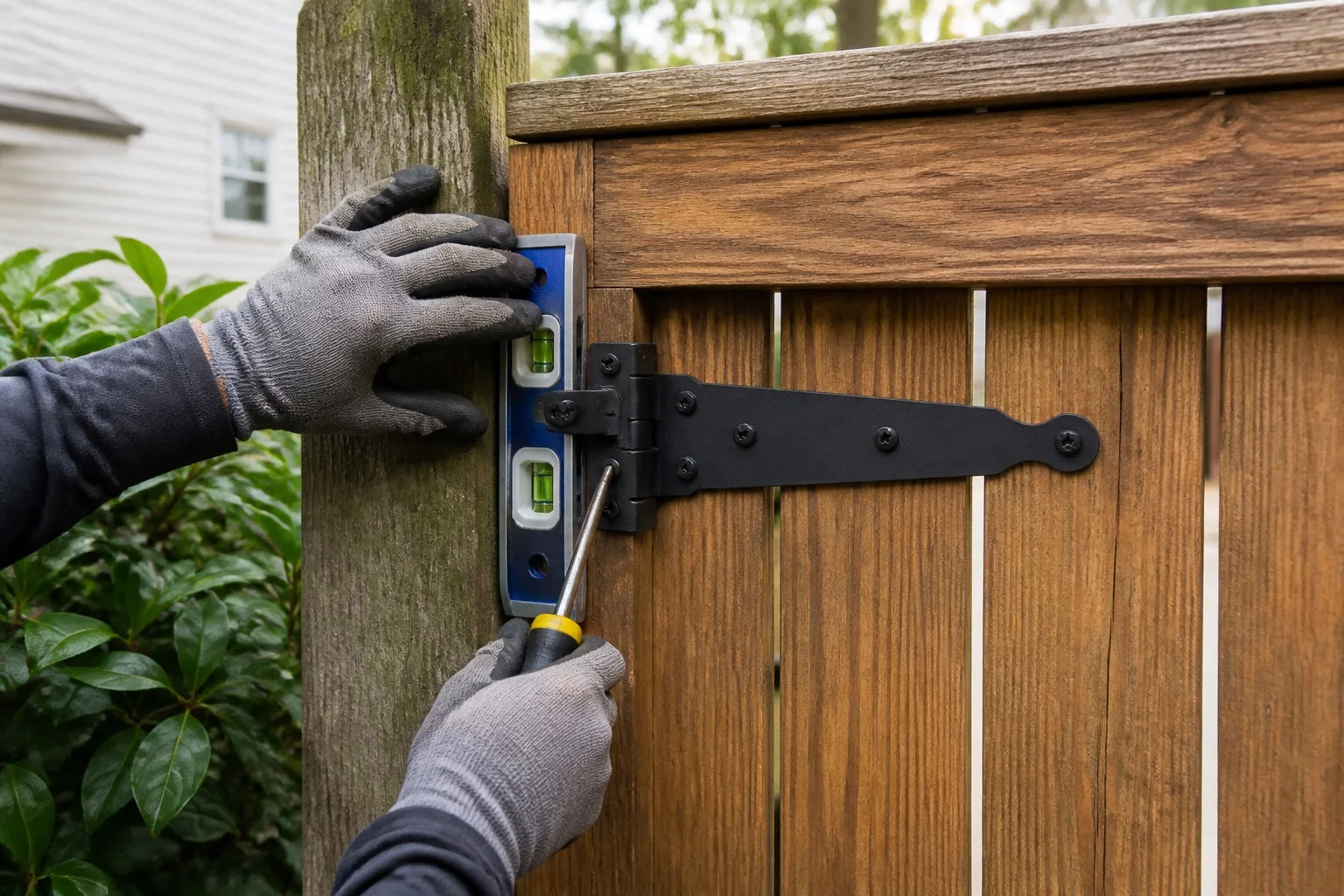
A fence gate that will not close is rarely just a latch problem. The latch shows where the alignment ended up, but the movement may have started at the hinge post, inside the gate frame, at the footing, or in the fence section beside it.
Before moving hardware, look at the complete opening. A small adjustment may solve normal wear. It will not solve a post that is leaning, wood that has lost strength, or a gate frame that has racked out of square.
What the gate is telling you
The way a gate fails can narrow the likely cause.
- The latch side drags on the ground. The gate may be sagging at the hinges, the frame may be racked, or the hinge post may be leaning.
- The latch sits lower than the receiver. Check the hinge post and gate frame before moving the receiver downward.
- The gap is narrow at the top and wide at the bottom. One of the posts may have moved, or the gate may have twisted.
- The gate swings open or closed by itself. The hinge post may be out of plumb, changing the direction gravity pulls the gate.
- The gate worked until wet weather or a freeze. Soil movement, swelling wood, debris, or reduced ground clearance may be involved.
- The gate feels loose when lifted gently at the latch side. Hinge hardware, fastener holes, frame joints, or the hinge post may be allowing movement.
Do not repeatedly slam or lift a heavy gate to force the latch. That can enlarge fastener holes, split wood, bend hardware, or add stress to a weak post.
Use a safe five-minute visual check
You can collect useful information without disassembling the gate. Keep hands clear of pinch points and do not remove hinges while the gate is unsupported.
1. Look at the hinge post
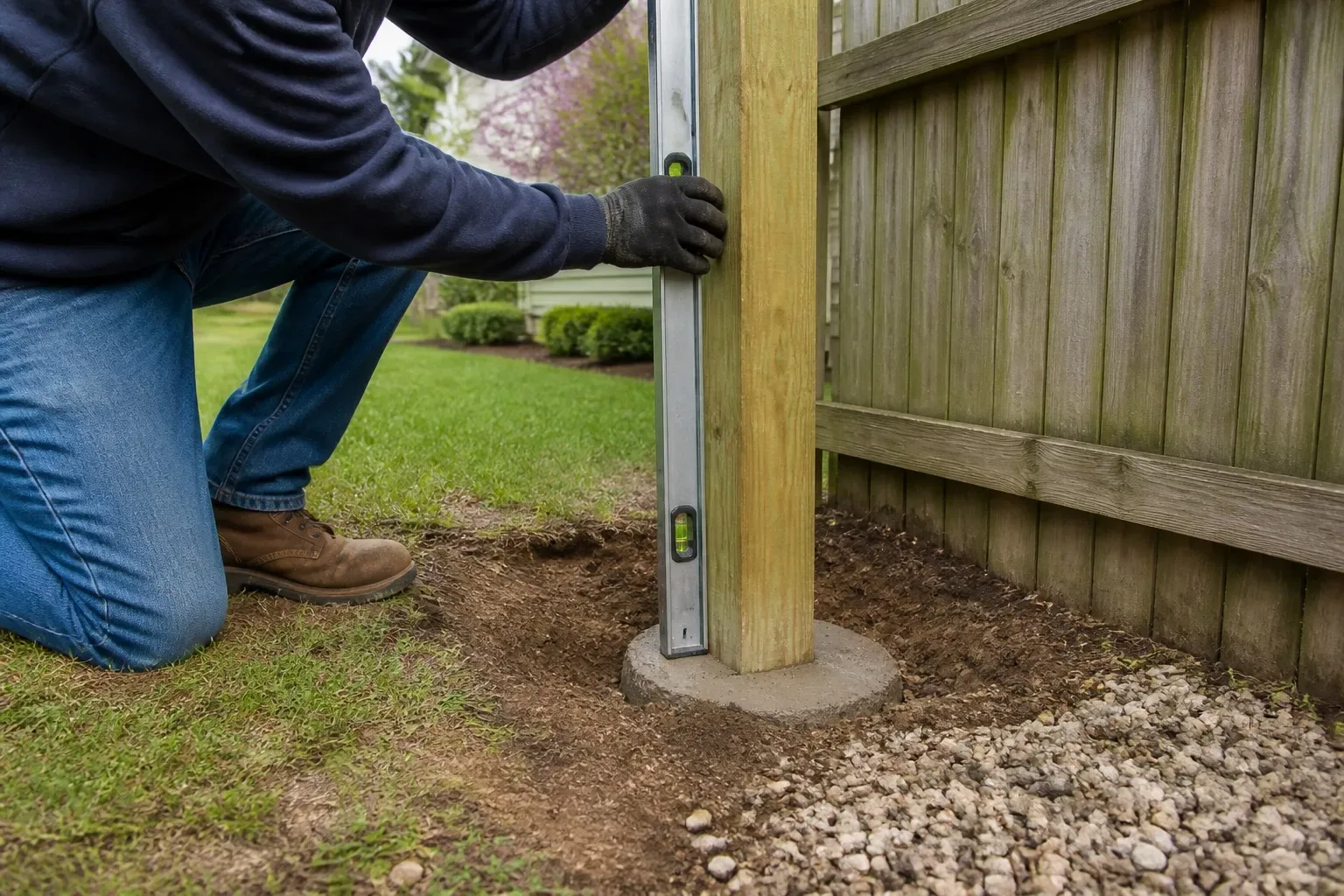
Stand back and compare the post with a nearby vertical line, such as a house corner. A level can provide a better check if the post is safe to approach. Look at the base for soil gaps, cracked concrete, rust at ground level, or wood that appears soft, split, or crumbled.
A gate acts like a lever on its hinge post. Even modest post movement can shift the latch side enough to prevent closing. If the post moves with light gate movement, the repair likely extends beyond latch adjustment. See the fence post repair service for common post and footing issues.
2. Compare the hinge-side and latch-side gaps
The space around a correctly aligned gate should be reasonably consistent for its design. A dramatic taper can point to a leaning post or a gate frame that is no longer square. Check whether the latch post is also leaning. Two stable posts with an out-of-square gate suggest a different repair than a sound gate hanging between moving posts.
3. Inspect the hinges and fasteners
Look for a bent hinge, loose bolt, lifted screw head, cracked wood around a fastener, or elongated mounting hole. Surface rust is not always structural failure, but badly corroded or distorted hardware needs closer attention.
Tightening a loose fastener may help only if it still bites into sound material. A screw spinning in damaged wood is not securing the hinge. Adding larger hardware without checking the post and gate frame can conceal the problem rather than correct it.
4. Look across the gate frame
A wood gate needs a frame that resists racking. Check whether corners have opened, diagonal bracing has loosened, rails have split, or boards are pulling away. For vinyl and aluminum gates, inspect welded or mechanical joints, internal supports, brackets, and manufacturer-specific connections.
Do not assume a cable kit or adjustable brace is the right answer for every sagging gate. It may help a suitable frame, but it cannot straighten a failed post or restore material that has cracked, rotted, or corroded.
5. Check ground clearance and obstructions
Mulch buildup, frost movement, roots, pavers, or a settled walkway can reduce clearance even when the gate has not changed much. Remove loose debris that can be cleared safely, but do not cut roots, grind masonry, or excavate around posts without understanding the effect on the opening.
Why moving the latch is often the wrong first repair
Relocating the latch receiver can make the gate close today while allowing the cause to continue moving. If the hinge post leans farther, the gate may drag or pull away from the opening. If the frame is racking, the latch-side corner may keep dropping.
A useful repair restores alignment at the source and then adjusts the latch. Depending on the condition, that may involve securing or replacing hardware, repairing the gate frame, resetting a post, replacing a failed post, correcting the latch post, or rebuilding a limited gate section.
The gate repair service is the best starting point when the opening, posts, frame, hinges, or latch need to be assessed together.
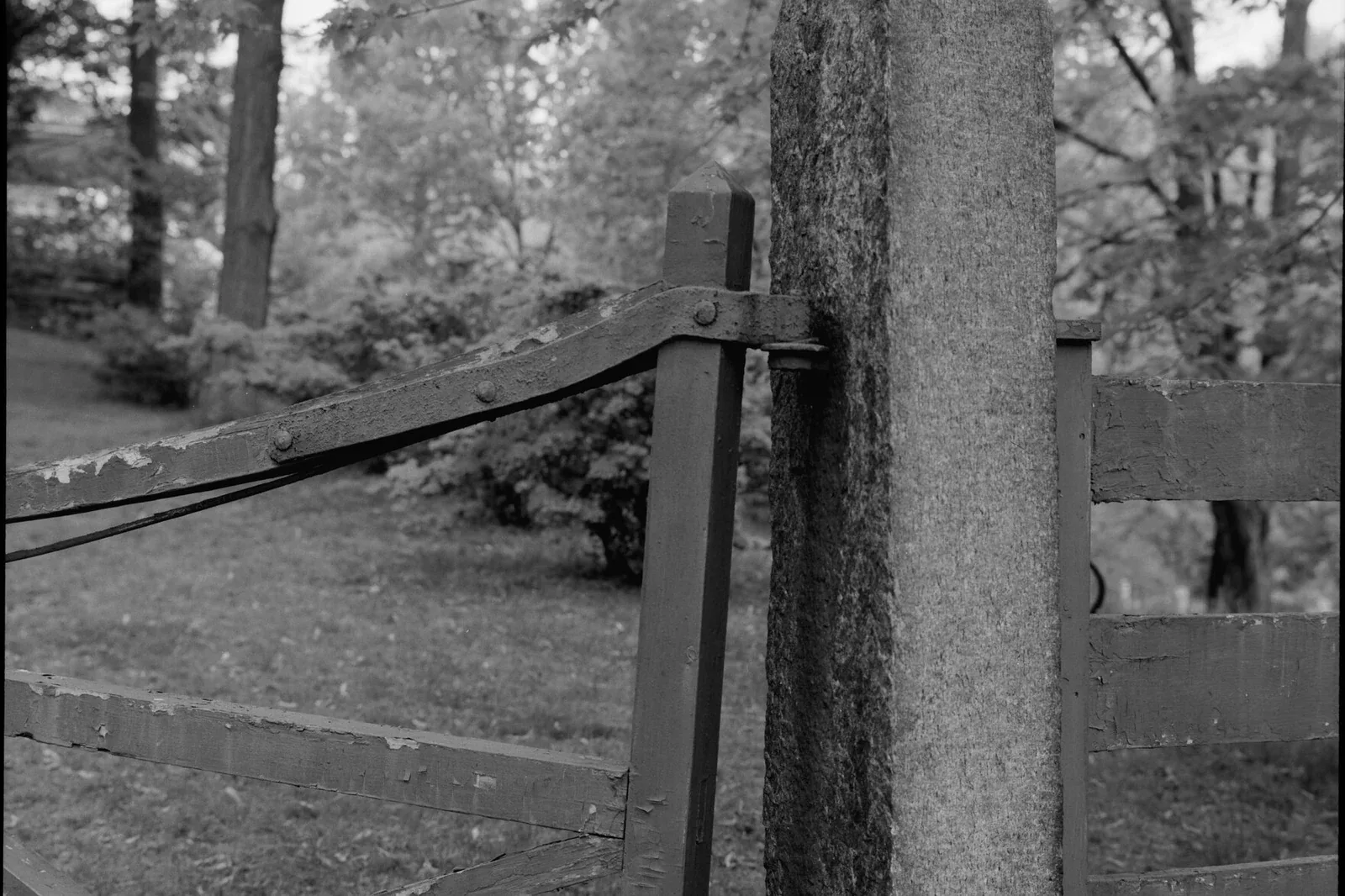
Wood, vinyl, and aluminum gates fail differently
Wood gates
Wood can split around fasteners, loosen at frame joints, absorb moisture, and decay near ground level. The U.S. Forest Service's Wood Handbook chapter on biodeterioration explains that fungal decay depends heavily on moisture and that visibly decayed wood may already have lost substantial strength. A post can therefore look acceptable above grade while being weak near the soil line.
A durable repair should use sound attachment points and address ongoing wet conditions where practical. The wood fence repair service covers localized wood components as well as related posts and rails.
Vinyl gates
Vinyl gates rely on compatible profiles, internal reinforcement, and system-specific hardware. Look for cracks around hinge mounts, rails pulling from pockets, loose inserts, and distorted posts. Replacement parts need to match the system closely enough to restore normal support and movement.
Aluminum gates
Aluminum gates can develop bent rails, damaged welds, loose brackets, worn hinges, or shifting posts. Forcing a bent gate into a latch can add stress to other connections. Pool-enclosure gates require special attention because their operation is part of a safety barrier.
Treat a pool-barrier gate as a safety issue
If the gate controls access to a swimming pool, do not treat failed closing or latching as a minor convenience problem. The U.S. Consumer Product Safety Commission's Safety Barrier Guidelines for Residential Pools describe gates in the barrier as self-closing and self-latching and provide placement guidance for latching devices.
Keep the pool area secured and prevent unsupervised access until the barrier and gate operate correctly. Local requirements may be more specific, so the complete barrier should be evaluated against the applicable code and property conditions rather than relying on a generic hardware adjustment.
Check the fence beside the gate
A gate opening depends on both posts and the sections that support or connect to them. Look one panel beyond each post for loose rails, pulled brackets, cracked material, or a top line that changes direction. A leaning adjoining section may be pushing or pulling the gate opening out of square.
If the problem extends into a connected section, fence panel repair may need to be considered with the gate work. Fixing only the latch would leave that movement unaddressed.
Post work requires utility-location planning
Resetting or replacing a gate post can require digging. The national 811 Before You Dig guidance says anyone planning to dig should contact the state 811 center, wait the required time, and confirm that utilities have responded before work begins. It specifically identifies fence projects as work that requires contact.
Do not dig around a gate post simply to see why it moved. Besides the utility risk, excavation can reduce the support that remains and allow the heavy gate to shift unexpectedly.
What to include with a gate repair request
Take one photo of the full gate from each side, then add close photos of the upper and lower hinges, latch and receiver, both posts at ground level, and any cracked or separated frame joint. Note the fence material, approximate gate width, whether the gate is part of a pool barrier, and whether the problem appeared suddenly or developed gradually.
Homeowners in Bucks and Montgomery Counties can request a free fence repair quote and upload the photos. Fence Repair Now can assess whether the problem is limited to hardware or whether the gate frame, posts, footing, or adjoining fence also need repair.