
Fence repair guide
Leaning Fence: Repair the Posts or Replace the Fence?
A practical homeowner guide to finding the cause of a leaning fence and deciding when focused post or section repair is sensible versus broader replacement.
Published October 9, 2026 · By Fence Repair Now
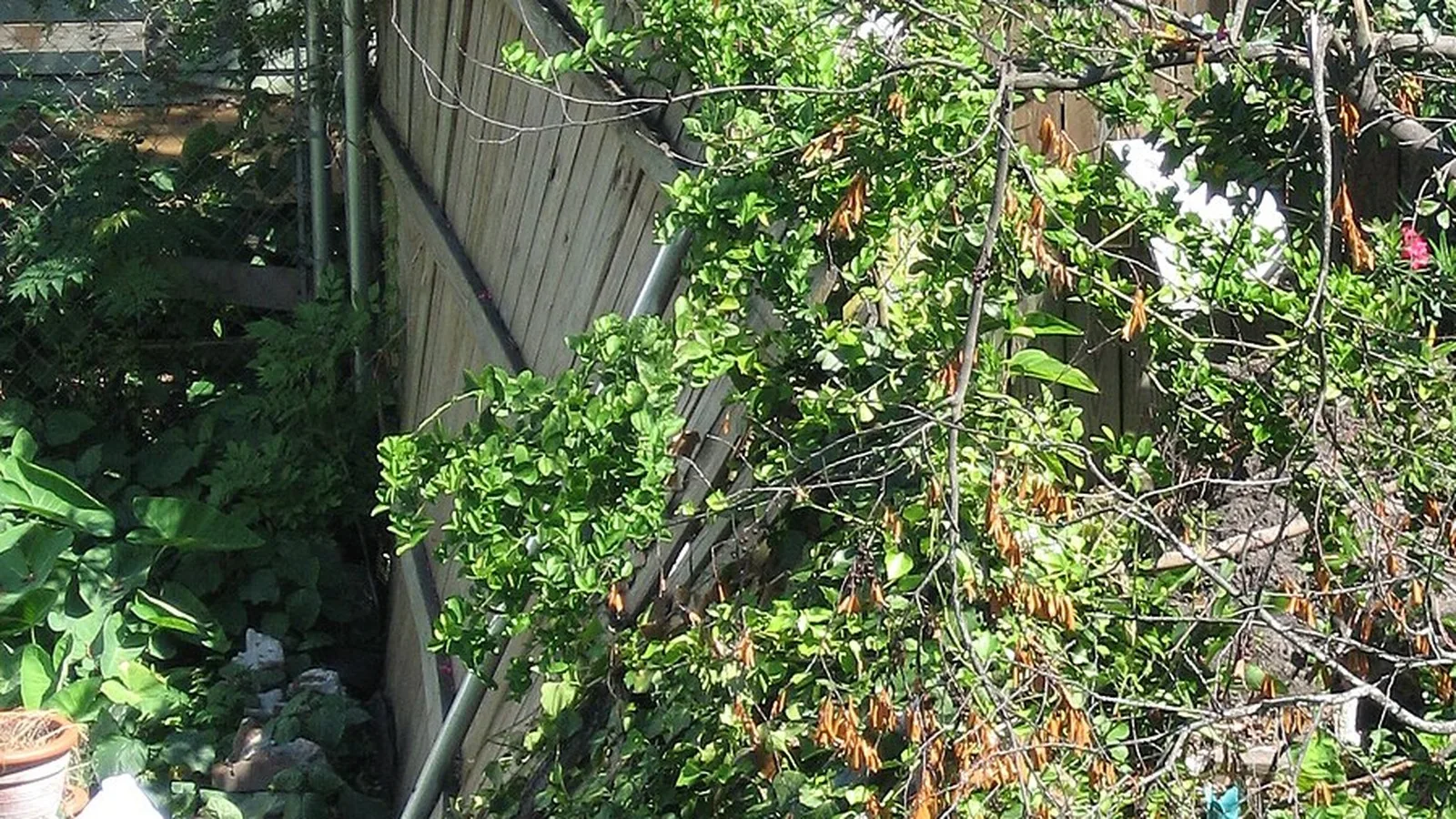
A leaning fence can look like a whole-fence problem even when the failure is limited to one or two posts. The useful question is not simply, “How far is it leaning?” It is, “Which parts have lost strength, and which parts are still sound?”
Posts carry the fence. Rails or panel brackets connect each section to those posts. Pickets, boards, or infill provide privacy and enclosure. If a post loosens in its footing, rots near the soil line, or breaks after impact, several otherwise usable sections may move with it.
That is why a careful inspection should come before a replacement decision. A targeted post or section repair may restore a fence that still has years of useful service. If deterioration is widespread, however, repairing one spot may only delay the next failure.
First, find out where the movement starts
Do not begin by pulling on every panel or trying to push the fence upright. Start with a visual check from both ends of the run. Looking along the top line makes it easier to see where the lean begins and ends.
Then check the area without climbing, shaking, or putting your weight against the fence:
- Look at each post at ground level. Darkened wood, deep splits, crumbling fibers, or a post that has snapped where it enters the soil can indicate decay or structural failure.
- Compare the post with its footing. A sound post may lean because the concrete footing moved. A rotted post may stay inside a solid footing while the wood itself has lost strength.
- Inspect the connections. Loose rails, failed brackets, pulled fasteners, and split boards can let a section rack even when its posts remain upright.
- Check the gate separately. A gate that drags or misses its latch often points to movement at the hinge post. The weight and repeated motion of a gate make that post especially important.
- Look beyond the worst spot. The visibly leaning section may have transferred stress to the next post or panel.
Keep children and pets away from a section that moves easily, has sharp broken material, or could fall. Do not brace it by attaching lumber to a neighbor’s structure, a utility fixture, or anything you have not identified.
Why wood posts often fail near the ground
The soil line is a demanding location for wood. It is where moisture exposure and structural load meet. The U.S. Forest Service’s Wood Handbook explains that fungal growth depends heavily on moisture and that serious decay occurs when wood remains above its fiber saturation point. The same chapter notes that visibly decayed wood may already have lost substantial strength.
That helps explain a common fence pattern: the boards above ground can look acceptable while the post is soft or hollow near its base. Appearance alone is not enough. Paint or stain may conceal damage, and the most affected area may be just below grade.

A professional assessment may include probing suspect wood and determining whether the post, the footing, or both have failed. Homeowners should avoid digging around the footing or cutting into a post before underground utilities are located and the section is safely supported.
Signs a targeted repair may be enough
A repair is often worth considering when the damage is concentrated and the surrounding fence remains stable. Typical repair-friendly conditions include:
- One or a few failed posts in an otherwise straight run
- A footing that shifted while the post and adjacent panels remain sound
- Rails or brackets that pulled loose without widespread material failure
- A gate problem caused by one moving hinge post
- Localized storm or impact damage
- Replacement boards, rails, panels, or profiles that can be matched reasonably well
In these cases, the work may involve removing the failed post and footing, setting a suitable replacement, and realigning or rehanging the existing sections. The exact method depends on the material, access, drainage, and condition of the neighboring components.
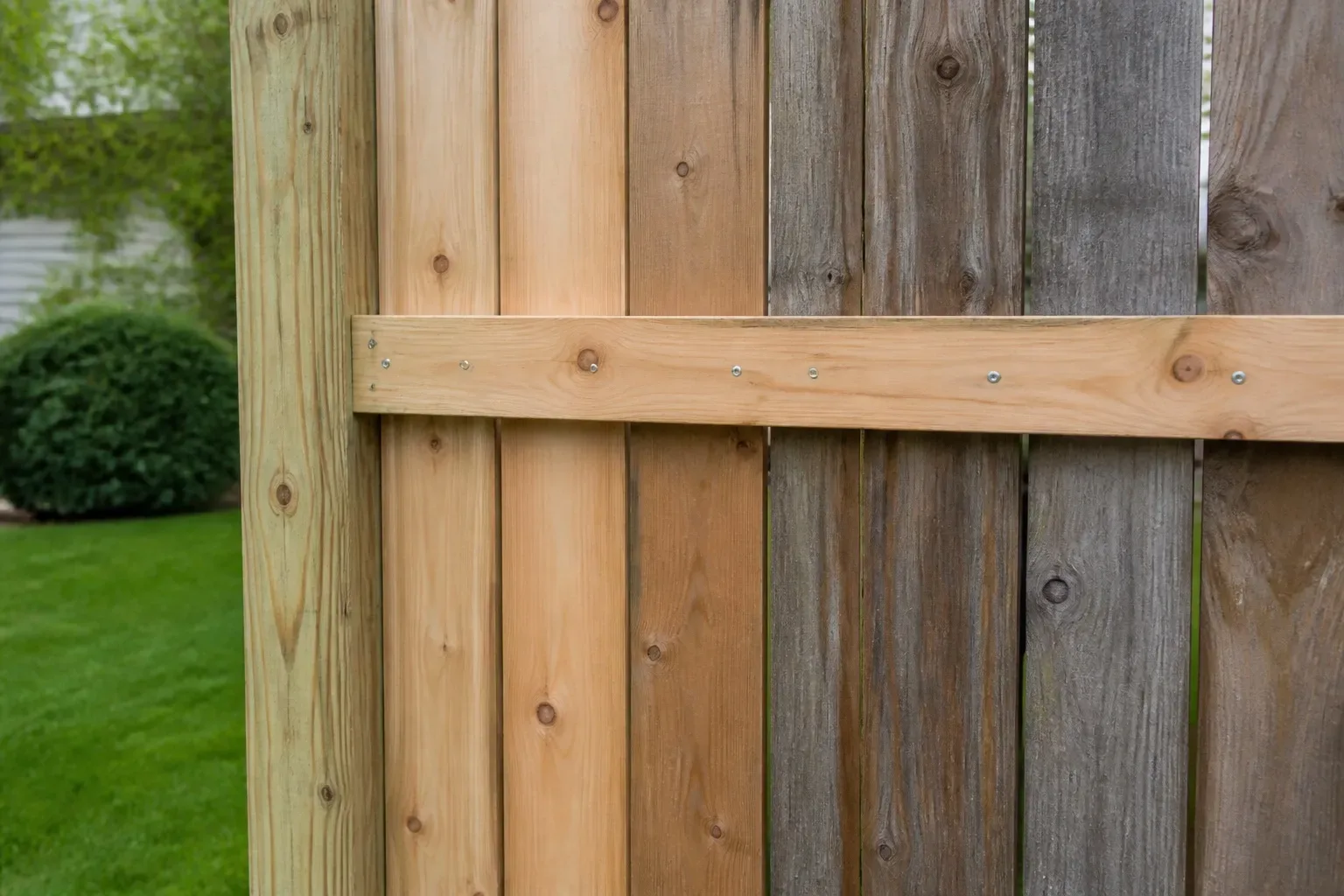
For wood fences, the repair should also address the moisture condition that contributed to the failure. The Forest Service recommends correcting the moisture source where possible and using appropriate treated or decay-resistant material when exposure cannot be avoided. Replacing weakened wood without correcting drainage or chronic wetting can recreate the same problem.
If the lean centers on one or two posts, see Fence Repair Now’s fence post repair service for the types of post and footing problems the team handles. For widespread loose boards, rails, or wood sections, the wood fence repair service is the more relevant starting point.
Signs replacement deserves serious consideration
A full replacement may make more sense when failure is no longer localized. Warning signs include:
- Many posts move or show decay along the same run
- Rails and boards are brittle, split, or failing in multiple sections
- Vinyl components have become broadly brittle and matching profiles are unavailable
- Metal sections have extensive corrosion, broken welds, or repeated connection failures
- The fence no longer serves its required function even after isolated repairs
- Previous patchwork has left too little sound material for reliable connections
- The layout, height, or condition must change for safety or another verified requirement
This does not mean every old fence should be replaced. Age is only one factor. Condition, material availability, function, and the share of the run that remains sound matter more than a calendar estimate.
Fence Repair Now specializes in repairs rather than new fence installation or full replacement. If inspection shows that replacement is the honest recommendation, the next step is to contact an appropriate installer rather than stacking short-lived repairs onto a broadly failed fence.
What about vinyl and aluminum fences?
A leaning vinyl or aluminum fence may still begin with a post or footing problem, but the inspection differs from wood.
With vinyl, look for cracked post walls, rails that have pulled out of their pockets, broken internal supports, and panels that no longer sit square. Because vinyl systems use manufacturer-specific profiles, repairability also depends on whether a compatible part can be sourced.
With aluminum, check post alignment, panel brackets, fasteners, bent rails, and gate hardware. Do not attempt to bend a pool enclosure back into place without checking the complete barrier and gate operation. A damaged enclosure has a safety function, not just a cosmetic one.
Avoid the quick fixes that hide the real failure
Several common fixes can make a fence look straighter for a short time without restoring its support:
- Driving wedges beside a decayed post
- Adding screws to wood that is already soft
- Pulling a run upright without stabilizing the failed footing
- Adjusting a gate latch while ignoring a moving hinge post
- Attaching a failing section to a tree, shed, or neighboring fence
- Covering rot with filler, paint, or a decorative sleeve
A lasting repair starts with the load path: sound post, stable footing, secure connections, and usable panels or rails. Cosmetic work comes after the structure is stable.
What to photograph before requesting a quote
Clear photos can help a repair specialist understand the likely scope before visiting. Take:
- One wide photo showing the entire affected run
- A closer photo of each leaning or damaged post at ground level
- Photos of loose rails, brackets, cracks, or broken boards
- A gate photo showing the hinge side and latch side, if relevant
- A photo from the opposite side when you can take it safely and with permission
Include the fence material, approximate number of affected sections, your ZIP code, and whether the damage followed a storm or impact. Do not submit another person’s private information or enter a neighboring property without permission.
Get the cause checked before deciding
A leaning fence does not automatically require replacement. When most of the run is sound, repairing the failed posts, footings, or connections can be the practical choice. When weakness appears throughout the fence, replacement may be more responsible than repeating isolated repairs.
The safest decision starts with evidence from the whole affected run, not a guess based on the most visible lean.
Want a repair assessment? Request a free fence repair quote and include wide and close-up photos of the affected area. Fence Repair Now serves homeowners in Bucks and Montgomery Counties and will tell you whether the visible problem fits a repair scope.